S.03 / CONSULTING

AI consulting that ends with something running.

AI consulting for businesses that doesn’t end in a slide deck: a diagnosis of which processes suit AI, feasibility on your data, risks and the EU AI Act, a pilot and putting it into production.

From diagnosis to something runningProcesses, data, risks and cost are analysed in a diagnosis that ends in a pilot, in production or in the conclusion that AI isn’t needed.01PROCESSES02DATA03RISKS04COSTDIAGNOSISPILOTPRODUCTIONNO AI NEEDEDFrom diagnosis to something runningProcesses, data, risks and cost are analysed in a diagnosis that ends in a pilot, in production or in the conclusion that AI isn’t needed.PROCESSESDATARISKSCOSTDIAGNOSISPILOTPRODUCTIONNO AI NEEDED

02 / PROBLEM

AI consulting that ends in a slide deck isn’t finished.

Recommending and building shouldn’t be separated: whoever recommends should be able to answer for what gets built.

Many companies have already paid for an AI study with an opportunity matrix and a phased plan. Months later, nothing is running: the analysis never reached the real data, nobody measured the cost per operation and the team that had to build it wasn’t part of the decisions.

I approach consulting differently: the diagnosis is validated on your data, the recommendation includes what it will cost to run, and the first piece is built and put into production.

03 / PROCESS

How I run AI consulting, step by step.

Six phases. Any of them can end in “not worth it”, and that’s a result too.

FIG. 03Diagnosis → feasibility → risks → pilot → production → measure
  1. 01 — DIAGNOSE

    Diagnosis

    Which processes eat up time, where the data lives and which decisions depend on it.

    • PROCESSES
    • DATA
  2. 02 — FEASIBILITY

    Feasibility

    Your real data shows which step suits AI, which is solved with rules and which isn’t worth it.

    • RULES
    • AI
  3. 03 — RISK

    Risks

    What data goes to the provider, what the AI Act says and what happens when the model gets it wrong.

    • AI ACT
    • DATA
  4. 04 — PILOT

    Pilot

    One bounded piece running with real users, with cost and quality measured.

    • USERS
    • COST
  5. 05 — PRODUCTION

    Production

    Integrated into your systems, with permissions, logging and someone accountable.

    • INTEGRATION
  6. 06 — MEASURE

    Measure

    Check whether it saves what it promised. If not, fix it or retire it.

    • RESULTS
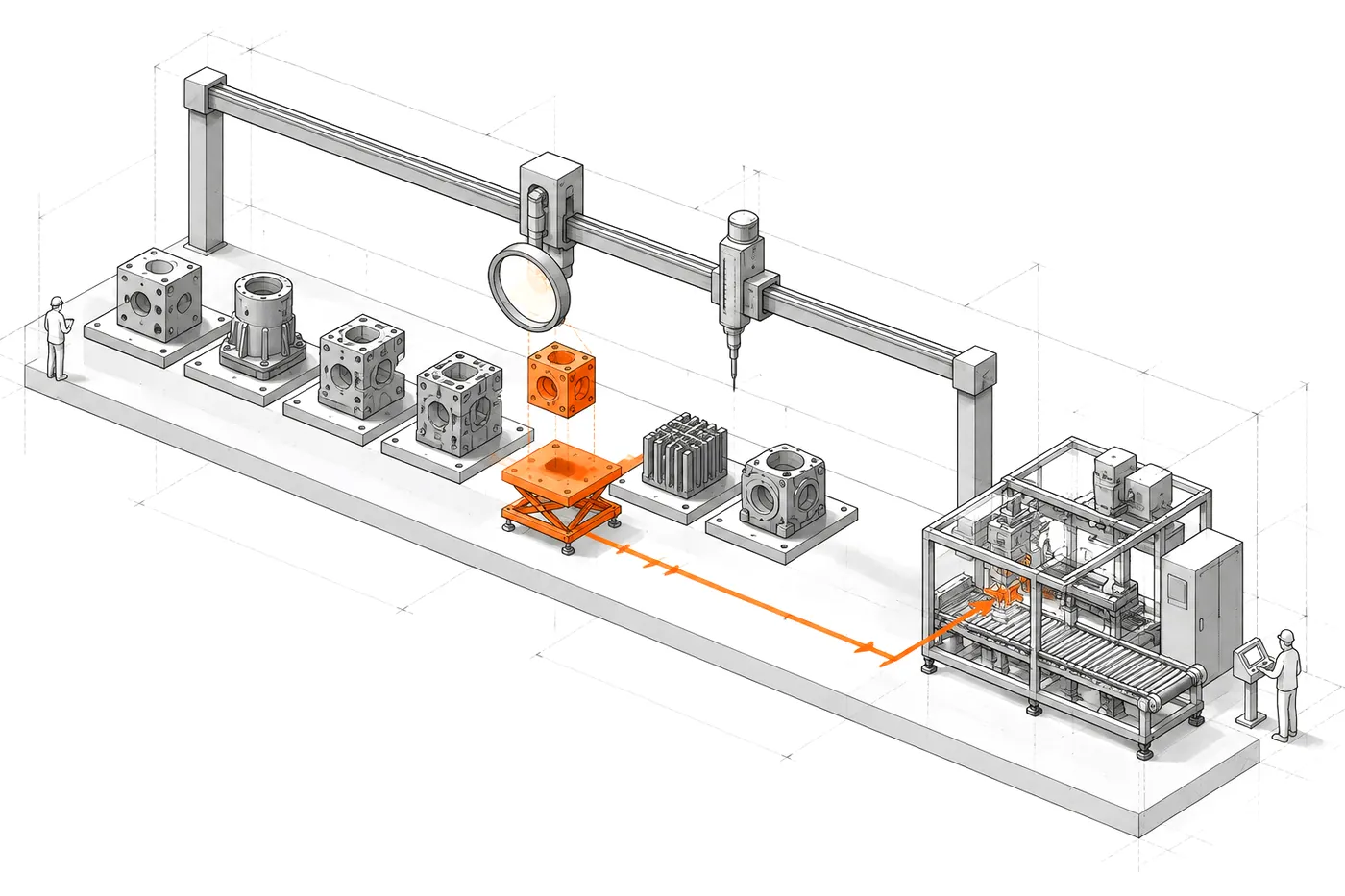
FIG. 04Every process is inspected; only one moves to the pilot and reaches production
Axonometric drawing of a row of process blocks inspected by a magnifier and a gauge on a rail; a single orange block moves to a pilot platform and an orange path takes it to a running system

05 / DELIVERABLES

What AI consulting includes.

Six concrete deliverables. None of them is a document that gets filed away: they’re all for deciding or building.

  • 01

    A map of candidate processes

    A short list of processes ranked by impact and feasibility, with what each one needs: rules, AI, data or a person.

  • 02

    A feasibility test on your data

    Not a demo with sample data: real questions and cases run against your information and evaluated before anything is promised.

    EvidenceAtalayaIQ

  • 03

    Risk and data analysis

    What data travels to the AI provider, which AI Act risk category the use falls into and which controls it needs.

  • 04

    Estimated cost per operation

    What each query or run will cost in production, before anything is built, so the savings aren’t eaten by the model bill.

  • 05

    A pilot in production

    The piece with the highest return, built and integrated with real users. The consulting ends with something that works.

    EvidenceRocio.com

  • 06

    Judgement for your team

    A hands-on session so your team knows what AI does in their work, what it doesn’t do and when to distrust it.

06 / FIT

When it makes sense.

Consulting works when there are specific processes and data to work on.

A good fit if…

  • You have specific processes that eat up hours and suspect AI could help, but don’t know which.
  • You’ve tried standalone tools and want something integrated into your systems.
  • You care about what data leaves the company and what it will cost to run.
  • You’d rather have a small pilot that works than a two-year transformation plan.

Not a fit if…

  • You want a strategy report for the board, with no intention of building anything soon.
  • There are no specific processes or data to work on yet.
  • The decision to use AI has already been made and only needs justifying.

07 / CONSULTANCY OR SPECIALIST

An AI consultancy or a specialist who builds it?

Both make sense. It depends on the size of the change and on whether you need to decide or to build.

Working with me fits if…

  • You want to talk to the person who designs and builds, with no sales layers in between.
  • The scope is one process or one area, not the whole organisation at once.
  • You need the analysis to end in an integrated, maintained system.

A large consultancy fits better if…

  • You need a change programme across dozens of areas and teams in parallel.
  • The project needs a large team from day one, with several full-time roles.
  • What you’re after is mainly change management and large-scale training, not building.

08 / AI ACT

Risks and the EU AI Act: what the diagnosis covers.

The European AI Act classifies uses by risk. These are the dates that matter today.

  1. Since 2 February 2025

    The AI practices listed in Article 5 are prohibited, such as social scoring or manipulation that exploits vulnerabilities.

  2. Since 2 August 2026

    Article 50 transparency obligations: anyone interacting with an AI system has to be told so, unless it’s obvious.

  3. From 2 December 2027

    Requirements for Annex III high-risk systems (employment, credit, education, among others), after the delay introduced by the Digital Omnibus on AI.

  4. From 2 August 2028

    Requirements for Annex I high-risk systems, those built into regulated products.

Sources: Regulation (EU) 2024/1689 and Regulation (EU) 2026/1744 (Digital Omnibus on AI). This isn’t legal advice: for your specific case, ask your adviser.

09 / EVIDENCE

Diagnoses that ended in production.

An assistant evaluated against real data before anyone relied on it, and a public assistant whose cost and quality are measured.

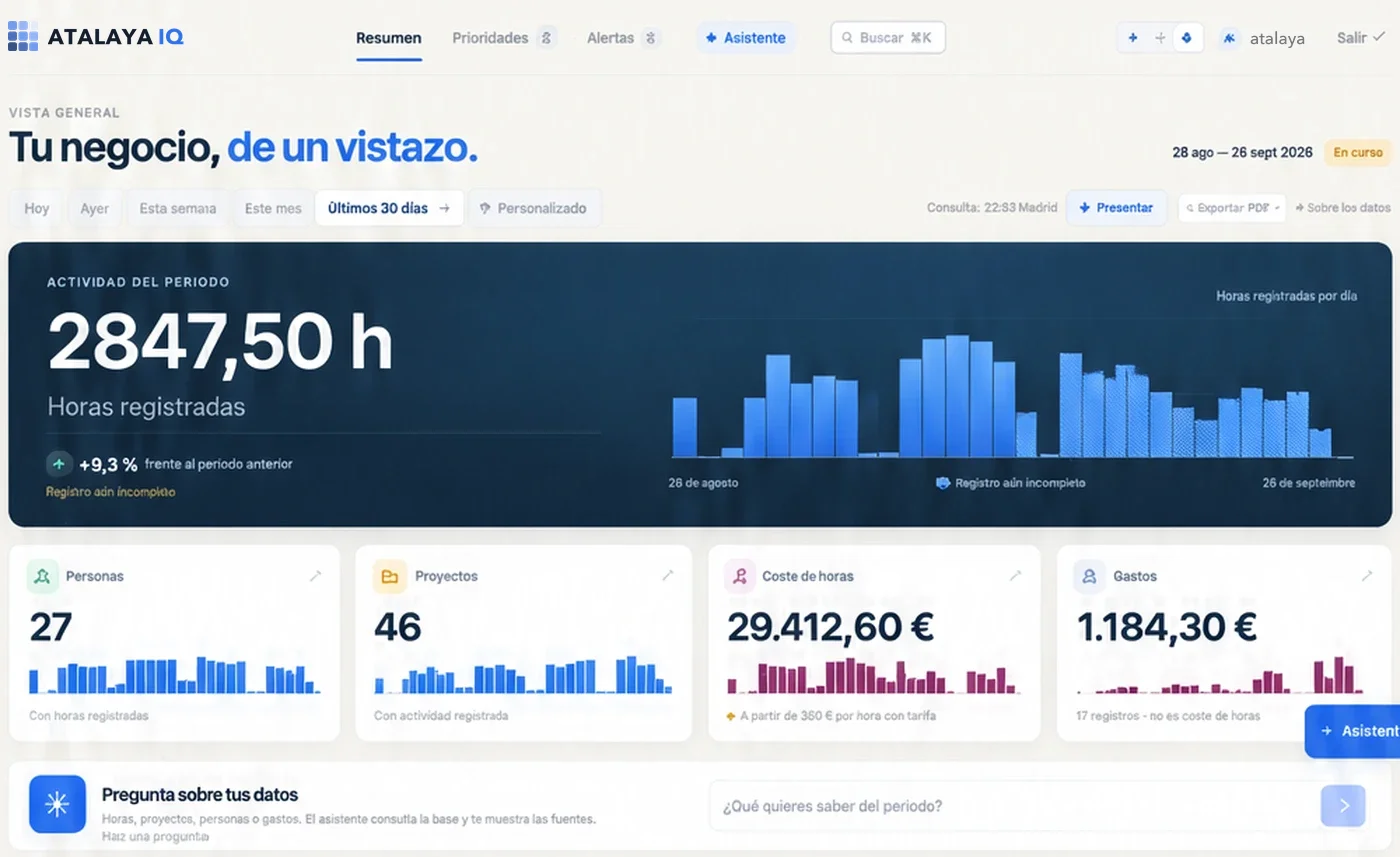
AtalayaIQ overview: hours logged over the last 30 days with their daily series, people, projects, labour cost and expenses.
Overview · last 30 days

Business intelligence

AtalayaIQ

Feasibility was tested on the company’s real data, and the assistant was evaluated before it reached management.

  • The assistant is evaluated against the real database and the real model.
  • A closed catalogue of queries: the model chooses, the server validates and runs.
  • Only the question, the text history and aggregated results go to the provider.

STACK Nuxt / Vue / MySQL

Case study: AtalayaIQ
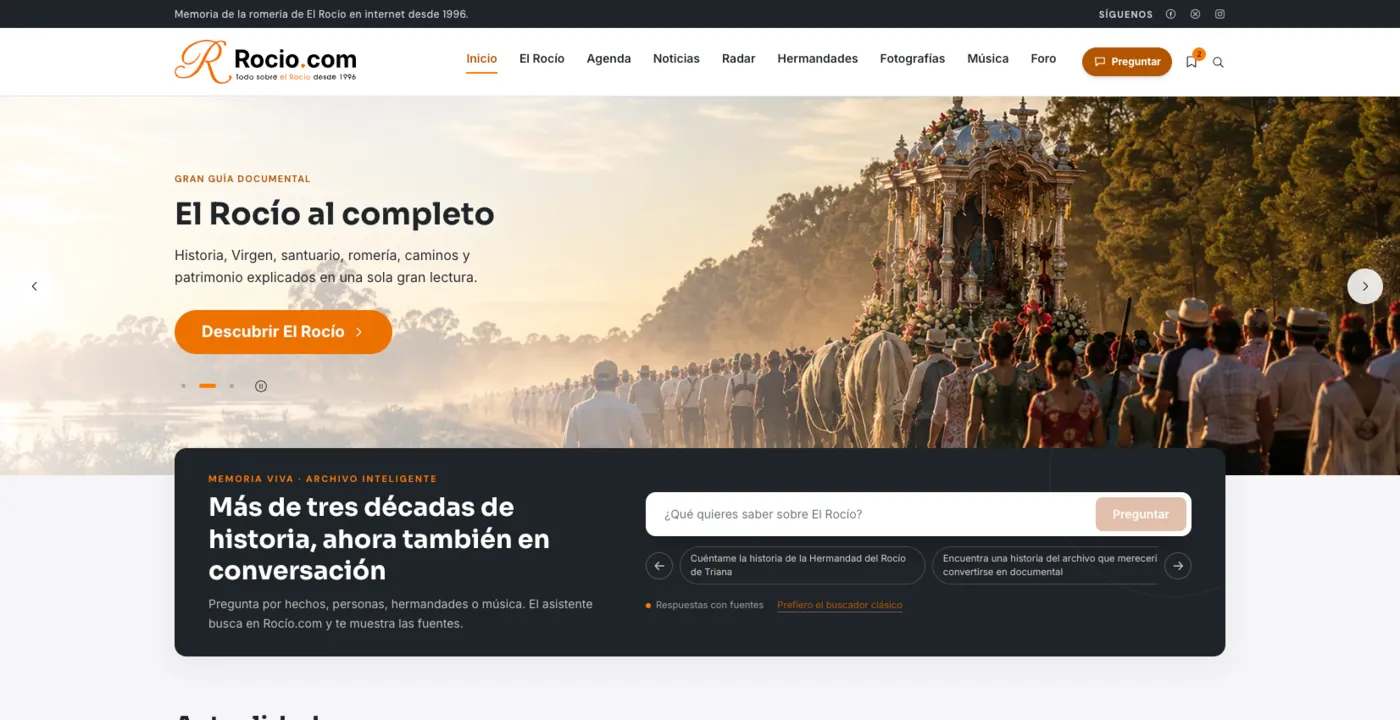
Rocio.com home page: the «El Rocío al completo» guide and a conversational search over more than three decades of archive.
Home page and conversational archive · rocio.com

Editorial platform

Rocio.com

A public AI assistant whose cost, latency and quality are measured conversation by conversation.

  • “Ask the archive” assistant on news, brotherhoods, sevillanas and historical events.
  • Internal conversation viewer with cost, latency and ratings.
  • No trend conclusions until there’s enough conversation volume.

STACK Nuxt / Vue / MySQL

Case study: Rocio.com

10 / QUESTIONS

Questions about AI consulting.

01

What does AI consulting involve?

Identifying which of a company’s processes improve with AI, checking feasibility on real data, assessing risk and cost, and taking the proposal to a working pilot. Good AI consulting also tells you where AI isn’t needed.

02

How long does an AI consulting engagement take?

It depends on scope. Diagnosing and testing the feasibility of one specific process takes weeks, not months. The pilot depends on what has to be integrated.

03

What’s the difference between an AI consultancy and an AI developer?

A consultancy usually delivers analysis and recommendations; a developer builds what someone else has decided. My work joins the two: I decide what makes sense to build and I build it, so the recommendation and the result don’t drift apart.

04

How does the EU AI Act affect my business?

It depends on the use. Most business uses, such as assistants or document automation, mainly carry transparency obligations. High-risk uses, such as recruitment or credit scoring, have much stricter requirements. The diagnosis checks which category each case falls into; for the legal interpretation, ask your adviser.

05

What if the conclusion is that I don’t need AI?

Then the consulting did its job. Often the real improvement is a rule, an integration or tidier data, and that’s cheaper and more reliable than a model.

When NOT to use artificial intelligence
06

Which models and providers do you work with?

Whichever best fits the task, the cost and the data terms. The provider is designed as a replaceable part of the system, not a hidden dependency.

11 / SAME SYSTEM

Related systems.

A business problem rarely lives in a single piece. These usually appear in the same project.

All systems

Which process would you like to know whether AI can handle?

Tell me the process, the data you have and what worries you. I’ll tell you whether it’s worth a diagnosis, whether it can be solved without AI or where I’d start.