S.01 / SOFTWARE

Custom software for businesses that no longer fit standard tools.

I design and build platforms, internal applications, CRMs and back offices around how your business actually works. Your business should not have to bend to a tool: the tool is built around your business.

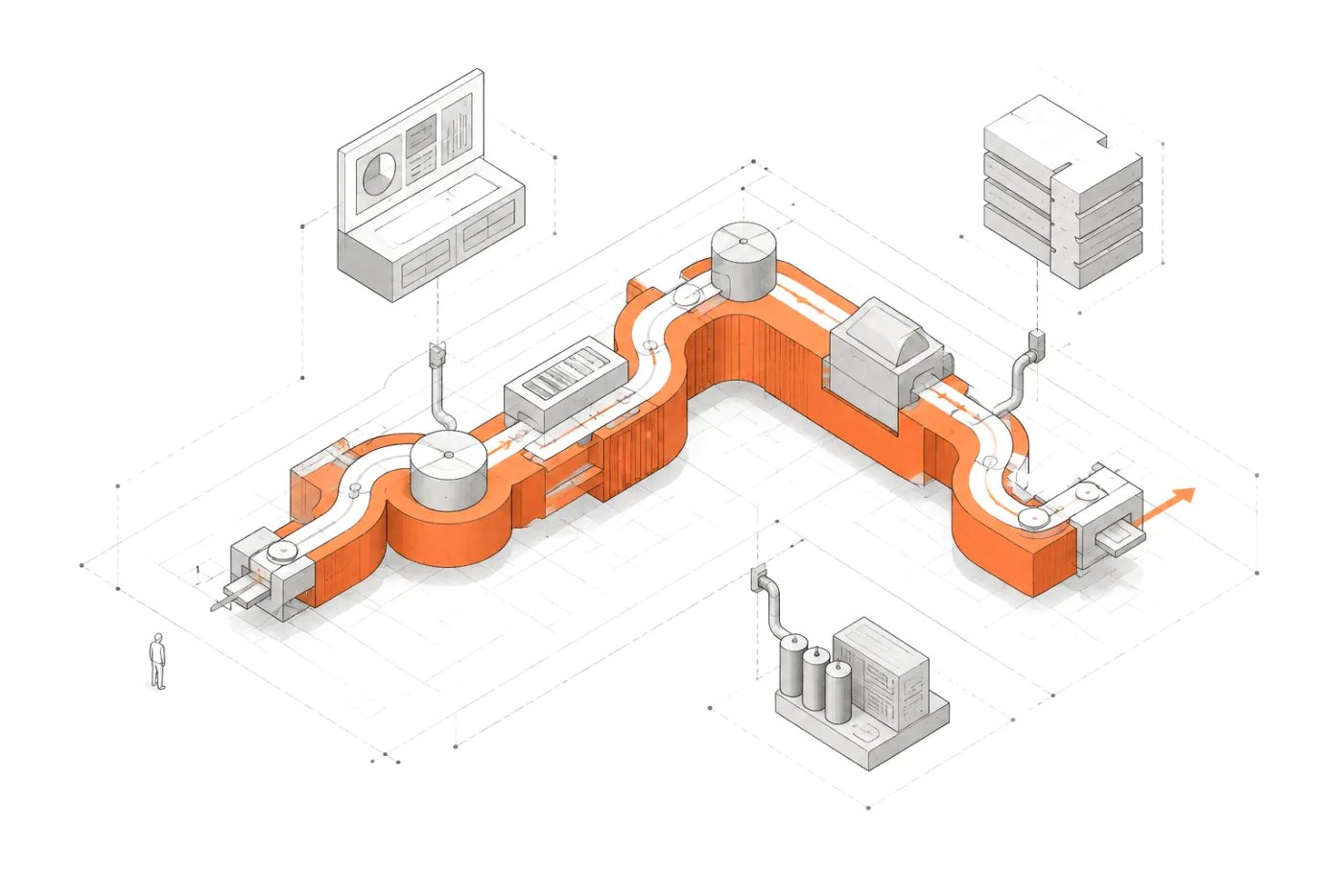
From real processes to custom softwareProcesses, teams, business rules and existing tools shape a custom platform that results in back offices, CRMs and integrations.01PROCESSES02TEAMS03BUSINESS RULES04EXISTING TOOLSPLATFORMBACKOFFICECRMINTEGRATIONSFrom real processes to custom softwareProcesses, teams, business rules and existing tools shape a custom platform that results in back offices, CRMs and integrations.PROCESSESTEAMSBUSINESS RULESEXISTING TOOLSPLATFORMBACKOFFICECRMINTEGRATIONS

02 / THESIS

Build only where it makes a difference.

Standard software is usually the right answer for standard processes.

Custom systems make sense when the way a company works is part of what makes it different.

That is where standard tools start to cost more than they save: parallel spreadsheets, data entered twice, and workflows bent around a vendor’s model instead of the team’s.

03 / SIGNALS

Signs your business has outgrown its tools.

When these signs appear, the problem is no longer the tool. It is that the way you work no longer fits inside it.

  1. 01Parallel spreadsheets hold the real process together.
  2. 02The same data is entered two or three times in different tools.
  3. 03You pay for features you do not use and still miss the ones you need.
  4. 04Every tool has its own version of the truth.
  5. 05The process is decided by the vendor, not by your team.
FIG. 02Software that follows the shape of the process
A platform built along an irregular process, with modules connected to its curves

04 / WHAT I BUILD

What I build.

Different pieces, one principle: the system is designed around your process and works alongside what already works.

  • 01

    Digital platforms

    Complete web products with content, users, data and their own administration, designed to keep growing for years.

    EvidenceRocio.com · Zentia

  • 02

    Internal applications and back offices

    The tools your team uses every day: operations, admin panels, approval workflows and internal management.

    EvidenceRocio.com

  • 03

    CRMs and sales tools

    Pipelines, customer records, tasks, campaigns and follow-up designed around your real sales process, not a vendor’s.

    EvidenceZentia

  • 04

    Customer and partner portals

    Private spaces where third parties check, submit or manage information without going through email or spreadsheets.

    EvidenceZentia

  • 05

    Integrations and APIs

    Connecting the tools you already use (ERP, CRM, databases, external services) so data is entered only once.

    EvidenceAtalayaIQ

  • 06

    Legacy system modernization

    Replacing a platform you have outgrown without losing its content, its data or what already works.

    EvidenceRocio.com

05 / EVIDENCE

Software built around a real process.

Systems that exist and are documented. No invented figures.

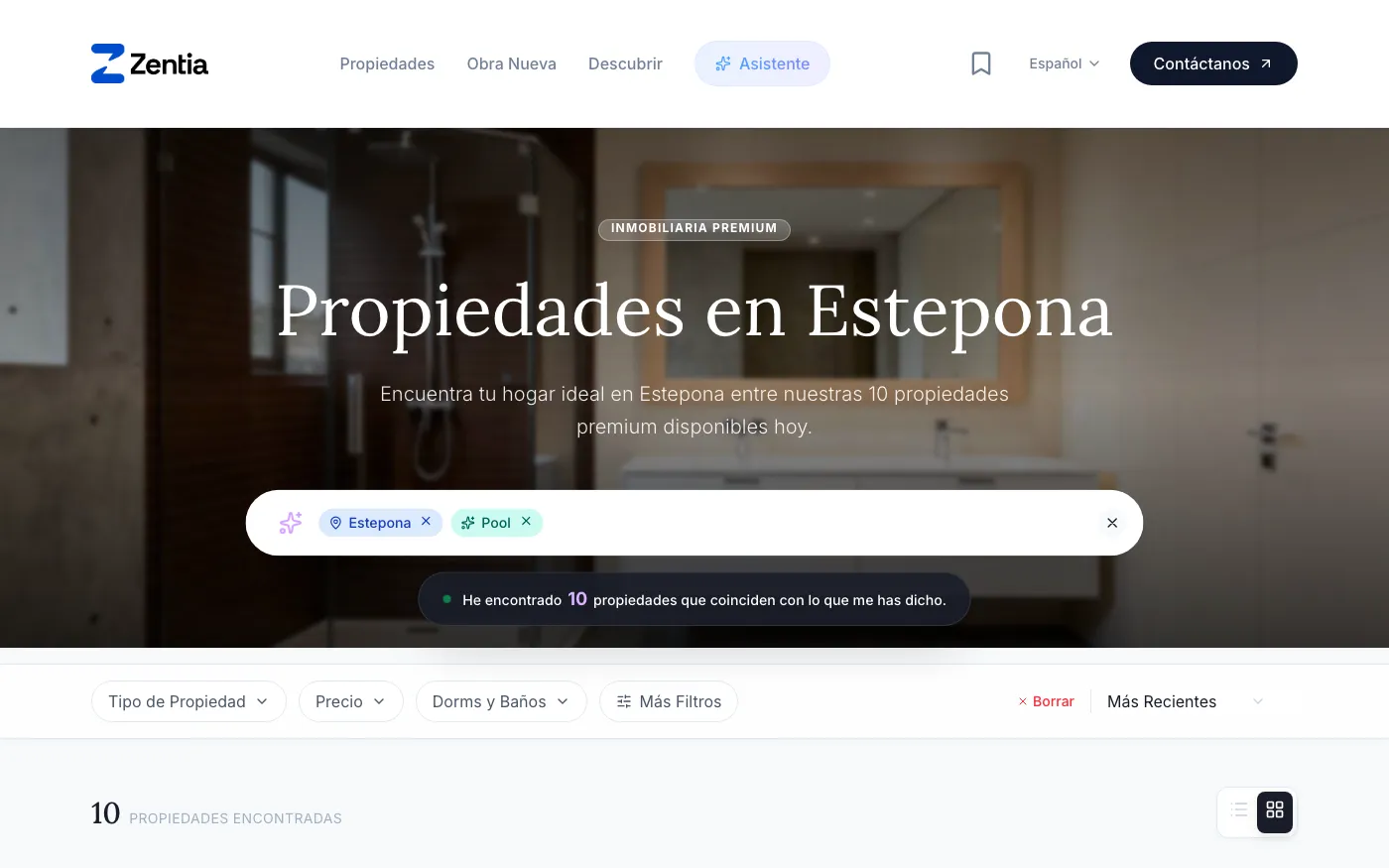
Zentia search: the Spanish phrase «casa en Estepona con piscina» (house in Estepona with a pool) turned into the filters Estepona and Pool, with ten properties found.
Natural-language search · zentia.pro

Multi-tenant platform

Zentia

One core for several real-estate agencies, each with its own brand, listings, leads and panel, instead of one product per client.

  • The agency is identified by its domain or subdomain before anything is rendered.
  • Row Level Security isolates each agency’s data in the database itself.
  • Brand, colours and copy live in configuration: a new agency needs no new deployment.
  • Leads arrive with the properties they viewed and their inferred preferences.

STACK Nuxt 4 / Supabase / PostgreSQL

Case study: Zentia
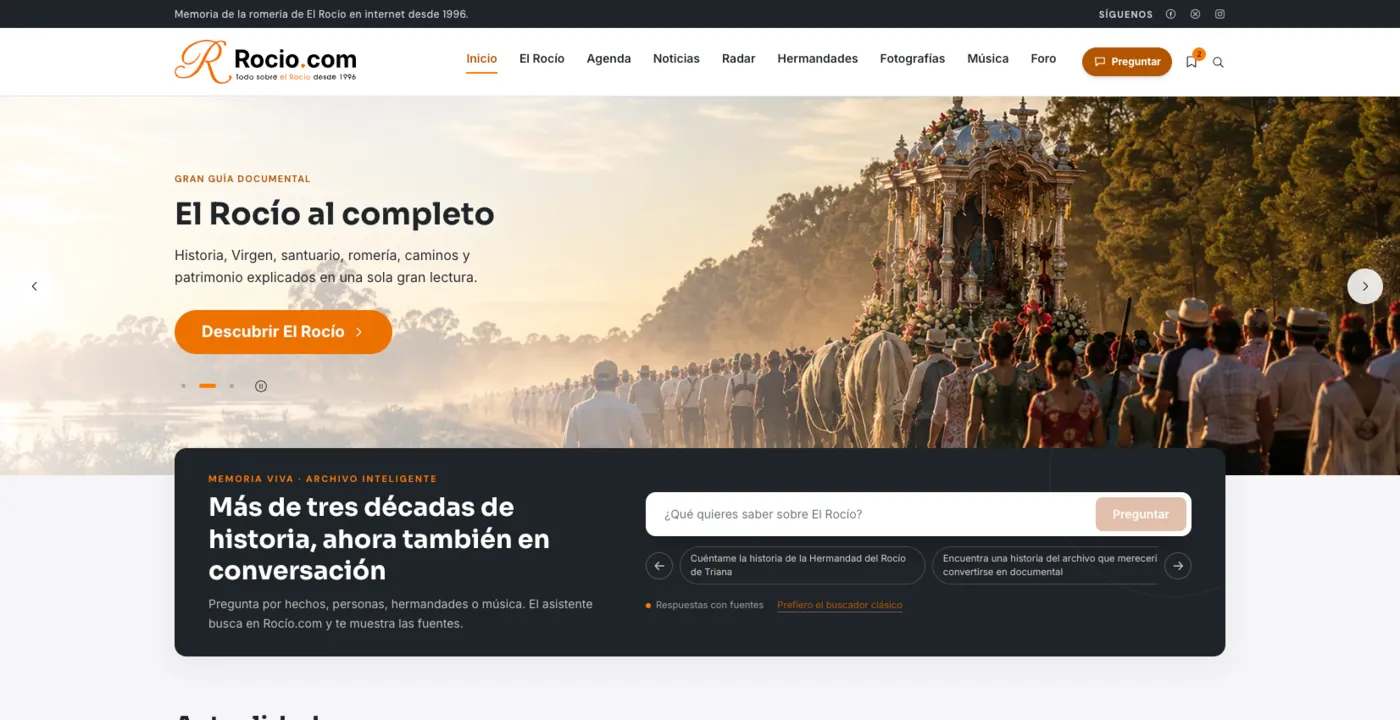
Rocio.com home page: the «El Rocío al completo» guide and a conversational search over more than three decades of archive.
Home page and conversational archive · rocio.com

Editorial platform

Rocio.com

A platform with around 15 years on WordPress rebuilt as its own system, without losing its content or its links.

  • Replaces the WordPress site the portal had been carrying for around 15 years.
  • The historical archive migrated to a normalized database.
  • A custom editorial panel to manage dynamic content.
  • News, events, brotherhoods and archive connected in one system.

STACK Nuxt 4 / Vue 3 / MariaDB

Case study: Rocio.com

ALSO BUILTGustela CRM, an internal sales-prospecting CRM with pipeline, campaigns, a send queue and automatic exclusion rules, designed around one company’s real sales process. No AI, because it did not need it.

06 / WHEN NOT TO

When not to build custom software.

If an existing tool solves the problem well, using it is usually the best decision. Custom work belongs in the part of the business that standard tools handle worst.

When custom software makes sense

  • The way you work is part of what makes your business different.
  • Your team keeps parallel spreadsheets to cover what the tool cannot do.
  • The same data is entered two or three times in different tools.
  • You need rules, integrations or permissions no standard product offers.

When it does not

  • Your process is standard and an existing tool already handles it well.
  • The problem is configuration or training, not the tool itself.
  • You need it next week and a proven product can do the job.
  • Nobody will own the system after launch.

07 / PROCESS

You bring the problem. I design and build the system.

You do not need to arrive with a solution, or know which technology you need.

  1. 01 — PROBLEM

    What is not working, what costs too much, or what cannot be done today.

  2. 02 — DATA

    What information exists, where it lives and what state it is in.

  3. 03 — CONSTRAINTS

    Budget, deadlines, existing systems, team and regulation.

  4. 04 — OBJECTIVE

    What has to happen for the system to be worth it.

  5. 05 — SYSTEM

    I design and build the system, and keep supporting it after launch.

How I work

08 / QUESTIONS

Questions about custom software.

01

What kind of custom software do you build?

Web-based systems for internal and external use: platforms, internal applications, CRMs, back offices, portals and integrations between tools. I work with current, maintainable web technology (Nuxt, Vue, TypeScript, Node, MySQL and PostgreSQL) so the system can be understood, maintained and extended.

02

When is custom software worth it?

When your process is part of your advantage, or your problem is specific enough that a standard tool forces your team to work worse. If an existing tool solves the problem well, using it is usually the best decision, and I will tell you so.

03

Can it integrate with the ERP, CRM or other tools we already use?

Yes, as long as they offer a way in: an API, a database, exports or files. The first step is to check what each system allows; often the best option is to integrate rather than replace. AtalayaIQ, for example, works on top of the database of the system the company already used, in read-only mode.

Read the AtalayaIQ case study
04

Who owns the code and the data?

Your company does. The repository, credentials and data belong to you, and the system does not lock you into a tool or a person. This is agreed in writing before the project starts.

05

Do you work with companies outside Spain?

Yes. I am based in Spain and work remotely with companies in other countries, in English or Spanish. You work directly with me, from the first conversation to the system running in production.

06

Can AI be added later?

Yes. A system with well-structured data and clear processes is the best foundation for adding AI when it brings something specific. Rocio.com and AtalayaIQ both include assistants that work on their own data.

AI and automation

09 / SAME SYSTEM

Other layers of the same system.

Software, data and AI are not separate services. They are designed to work together.

All systems

Has your business outgrown standard tools?

Tell me the problem, the data, the constraints and the objective. You do not need to know yet what has to be built.