Your FITUR 2027 stand: the digital side is decided now, not at build-up
Exhibiting at FITUR 2027 (20–24 January, IFEMA Madrid)? Screens, video walls, QR web apps and visitor data are locked in months before the stand goes up.
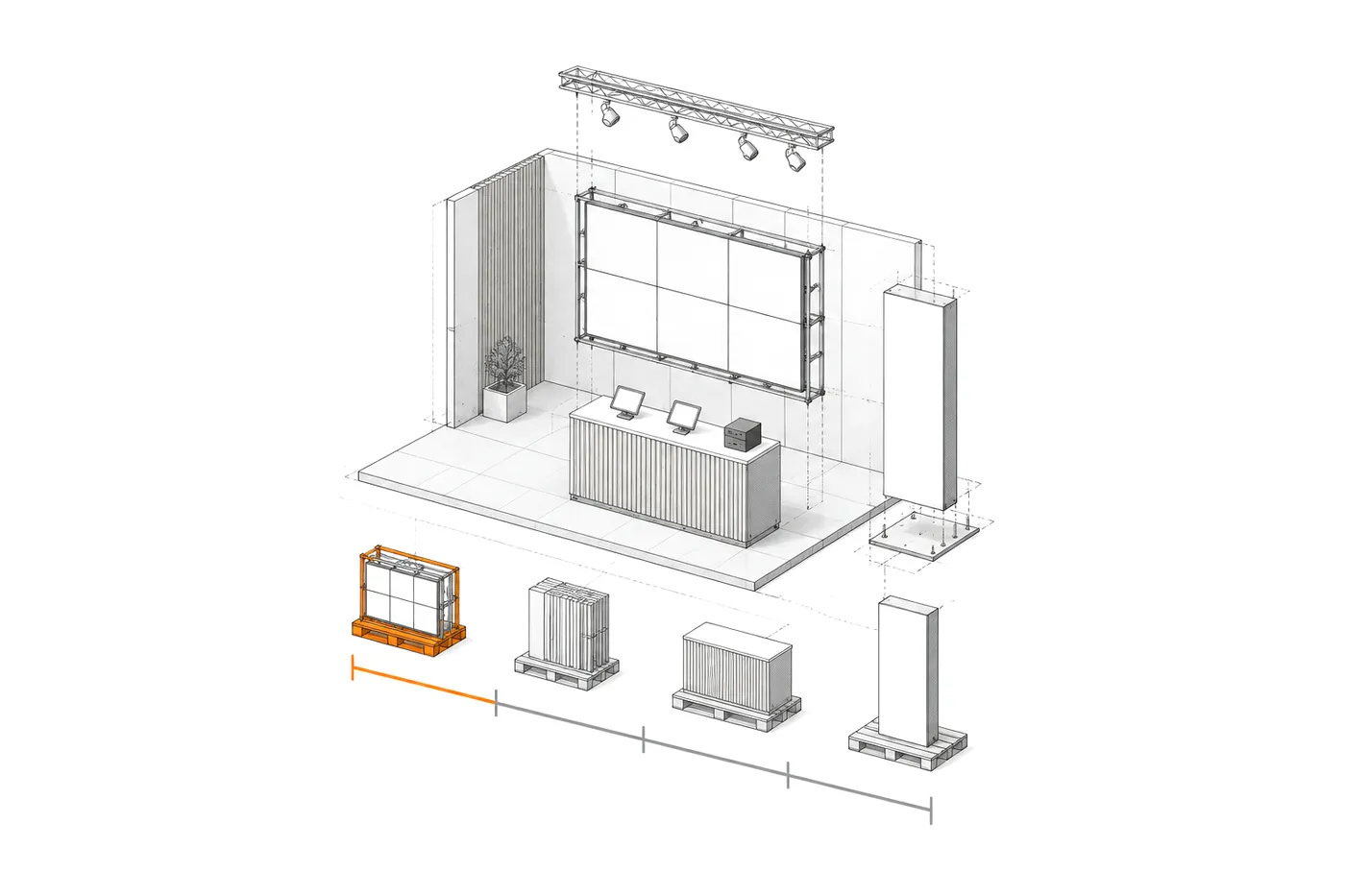
The technology on a FITUR stand (screens and video walls, a QR lead-capture web app, meeting tablets and visitor tracking) gets decided in October and November. December is for building it and testing it on the real hardware. January is for rehearsing, installing and running it.
In October, FITUR still feels far away. There are proposals to close, budgets to adjust and a stand design that keeps changing every week. The digital side (the video wall, the tablets, registration, the QR activation) tends to get pushed back until the space is final.
Then December arrives, with the holidays in the middle, and January opens with build-up.
FITUR 2027 runs from 20 to 24 January at IFEMA Madrid, across eleven halls: three trade days and a weekend open to the public. For the digital side of a stand, that means the digital timeline starts long before the build-up timeline.
What technology does a FITUR stand need?
No two stands need exactly the same thing, but almost everything digital I see at FITUR falls into four pieces:
- Screens and video walls. Content is designed for one specific screen: its orientation, its resolution and the distance it will be read from. If it can also show something live (table occupancy, audience participation), it works far harder than a looping video.
- A QR lead-capture web app. Visitors scan and they're in within two seconds, with nothing to install. A native app rarely pays off at a trade show: nobody downloads an app for a stand they'll spend ten minutes at.
- Meeting and registration tablets. They identify attendees by QR or NFC, show the status of every table and are run by stand staff, not technicians.
- Visitor data. Registrations, meetings held, participation. It's the piece most often forgotten, and the only one left once the stand comes down.
The October question isn't which of the four to include. It's which ones add something to what has to happen on the stand, and which ones are just set dressing.
Why the digital side can't wait for the space
Since FITUR 2020 I've built systems for pavilions at FITUR, MWC, ITB and WTM. The lesson that keeps coming back is that a trade show has no "we'll fix it tomorrow". The system has a date, a physical space and specific devices it has to run on.
That's why, in Event Tech, the first decision is always the same: design for the real physical environment. Device, resolution, connectivity and who will operate it are settled at the start, not on build-up day.
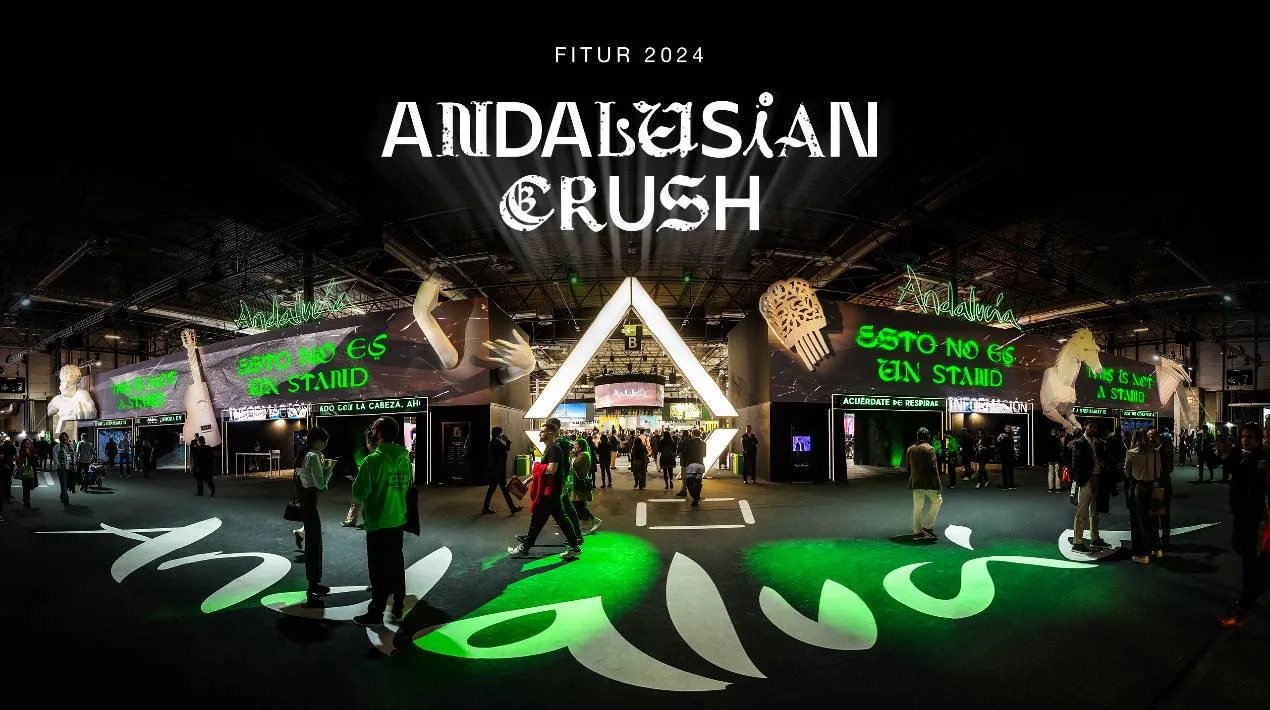
Those four things shape everything else. A large vertical screen can't take the same content as a horizontal one. An activation that relies on the venue network needs a different design from one that works without it. And a tablet run by different stand staff every day can't have the same interface as a panel built for technicians.
FITUR 2027 stand timeline, month by month
This is the timeline I recommend to get your FITUR stand to January without surprises. It isn't a rule: it's the order that has worked best for me.
October: decide what's feasible
- What has to happen on the stand, described as the visitor's experience, not as a list of technologies.
- Which digital pieces are genuinely needed and which are set dressing.
- What data you want to have when the show closes.
- A first technical check: if something can't be delivered well on time, better to know now.
November: lock in the physical side
- Specific devices, with their model, orientation and resolution.
- How each piece connects, and what happens if the venue network goes down.
- Who operates what, how many people and on which shifts.
- What content each screen needs and who delivers it.
December: build and test on the real hardware
- The system running on the real devices (or equivalent ones), not just on a laptop.
- Final content at final resolutions.
- A fallback for every piece. If the network or a device fails, the stand has to keep working.
January: rehearse and hand over
- A full rehearsal with the people who will run the stand.
- Interfaces that need no training: stand staff change, and there's no time for courses.
- Build-up, on-site checks and someone reachable throughout the show.
Trade visitors first, the public second
FITUR puts two audiences in the same week. The first three days are for trade visitors: meetings, appointments, networking, tables that fill up and free up. At the weekend the general public arrives, with a different pace, a different volume and different expectations.
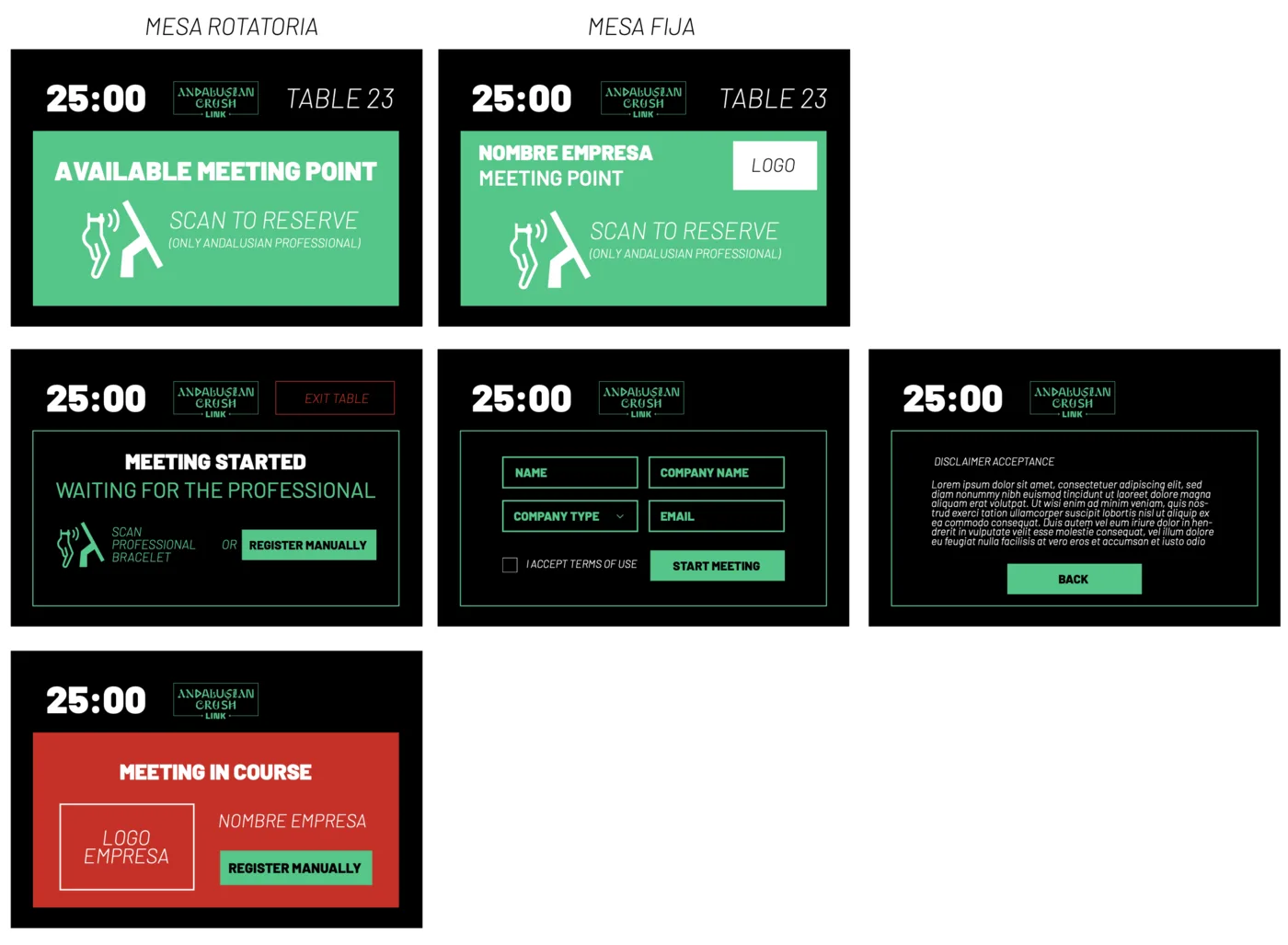
A system designed for only one of them falls short with the other. In Andalusian Crush Link — Match & Meet, used at ITB and WTM between 2024 and 2026 for Turismo de Andalucía, the focus was trade meetings: tables, attendees, tablets with NFC/QR, statuses, a timer and a 4K occupancy display. If a stand also has to work for the weekend crowd, that decision gets made in October, not on Friday afternoon.
Visitor data: decide what to measure before build-up
When the show closes, the client's question is almost always the same: what did we get out of the stand? If the answer depends on counting business cards or rebuilding a spreadsheet by hand, the data arrives late and incomplete.
What gets measured is decided in October, along with everything else:
- What counts as a useful contact. A QR scan isn't worth the same as a meeting that actually happened.
- Where each piece of data is stored and who receives it, ideally at the end of each day rather than a week later.
- What visitors are asked when they register, with the consent wording settled before a single QR is printed if personal data is collected.
- How trade days are kept apart from the weekend, because mixing them makes both sets of figures useless.
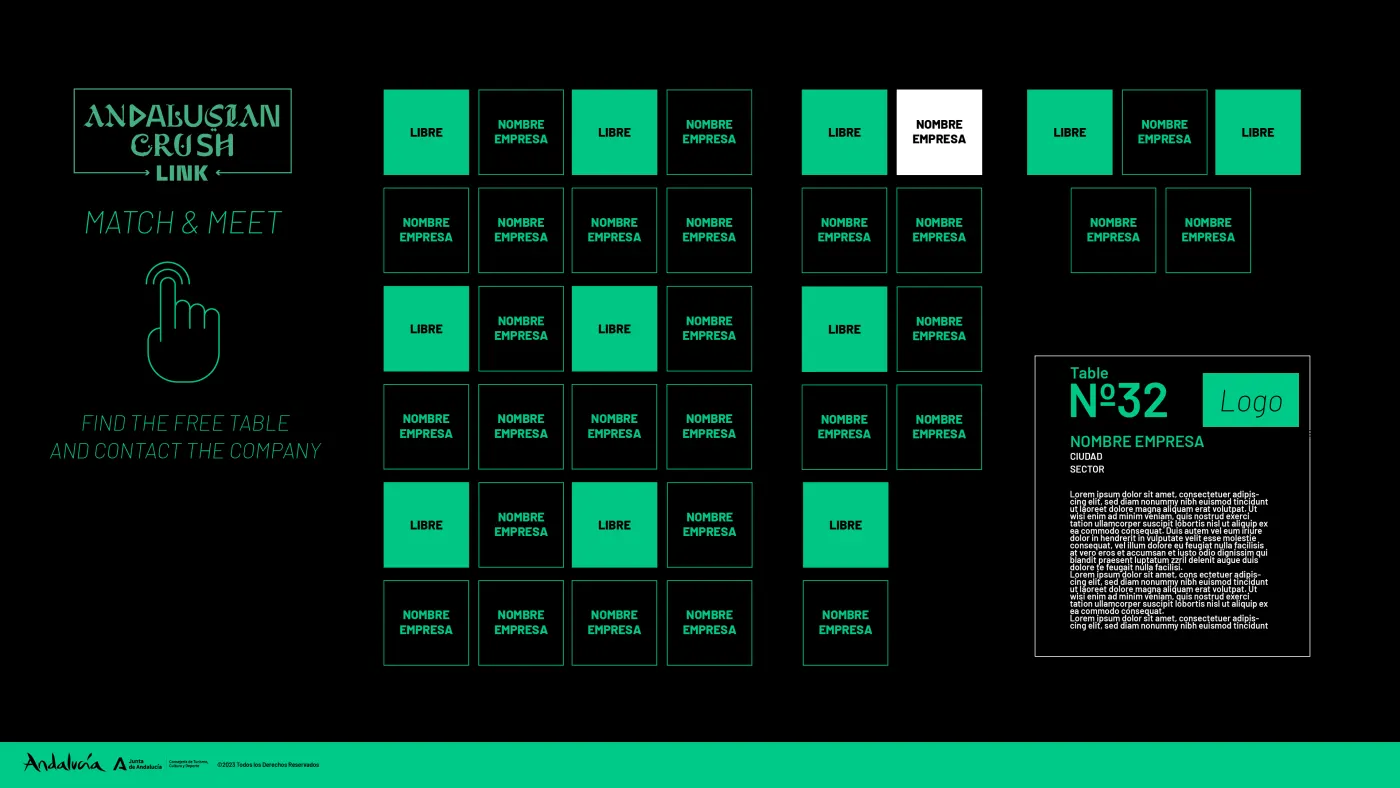
In Event Tech the data was part of the system itself: at FITUR 2024, the pavilion's overhead screens showed the emotion registered in real time with its percentage, and at ITB the 4K display showed the occupancy of every table. When the system records what happens, the final report is already done.
What you lose by deciding late
When the digital side is decided in December, it rarely fails spectacularly. It fails in quieter ways:
- The activation gets simplified until it no longer adds anything.
- Screen content ends up as a looping video because there's no time for anything else.
- There's no fallback, so everyone crosses their fingers about the venue network.
- Nobody tests with the real staff, and day one becomes the learning curve.
- When it's over there's no data, because nobody designed what to measure.
I wrote about that last point in a video wall shouldn't just be a pretty video on a loop, and about October's validation in before selling a digital activation, make sure it can be delivered. Why all of this behaves like a system rather than a set of screens is in a stand with technology is a small system running live.
At a trade show, the date doesn't move. The only thing you can move is when the decisions get made.
FITUR stand FAQ
When is FITUR 2027?
From 20 to 24 January 2027 at IFEMA Madrid. Wednesday 20 to Friday 22 are trade days; on Saturday 23 and Sunday 24 the show opens to the general public.
How far ahead should the stand technology be planned?
About three months. What's feasible is decided in October, devices and connectivity are locked in November, December is for building and testing on the real hardware, and January is for rehearsing and build-up. It can be done with less time, but what gets cut is usually the testing and the fallback.
What if the venue network fails?
Assume it will at some point, especially at peak hours. Every piece needs a fallback: content that plays locally, registrations stored on the device and synced when the connection comes back, and a dedicated connection for anything that can't stop.
Do I need an app, or is a QR web app enough?
For a stand, a web app is almost always enough: it opens when the QR is scanned, works on any phone and asks visitors to install nothing. A native app only pays off if it will be used beyond the show. In a QR code isn’t a sticker I explain what has to happen after the scan.
If your agency is preparing a FITUR 2027 stand and the digital side is still open, the Event Tech case study shows the kind of trade show systems I build, and you can tell me about your stand.